Buying camping gear through links on this page may earn Basecamp Budget Lab a small commission at no additional cost to you. How Basecamp Budget Lab earns revenue
A camping mattress serves one primary purpose: keeping your body off the hard ground while retaining enough warmth for a restful night. The right choice depends entirely on how you travel. Backpackers need ultralight pads that compress into a small stuff sack, while car campers can prioritize thickness and width over packability.
This guide breaks down the practical differences between the main types of inflatable sleeping pads available at budget price points. The product details below are drawn directly from marketplace listing claims rather than independent testing, so we will highlight exactly what is stated and what requires verification before you buy.
The Three Main Types of Inflatable Sleeping Pads
When shopping for an air-based camping mattress, you will generally encounter three distinct designs. Understanding them prevents buying a heavy car-camping mat for a backpacking trip or a paper-thin hiking pad for winter car camping.
- Ultralight Inflatable Pads: These rely entirely on trapped air for cushioning. They pack down very small and weigh little, making them ideal for hiking and trekking. However, because they contain no insulating foam, their warmth depends heavily on the air inside, which can cool rapidly in cold weather.
- Self-Inflating Mats: These feature open-cell foam encased in an airtight shell. When you open the valve, the expanding foam draws air in automatically. You usually need to top them off with a few breaths or a pump. They offer better insulation and durability than pure air pads but are heavier and bulkier.
- Double-Wide Mattresses: Designed for two people or solo campers who want maximum space, these are almost exclusively for car camping or basecamps where weight is not a concern.
Budget Inflatable Options by Use Case
The following options represent different approaches to sleeping outdoors. Prices are reference figures captured on October 15, 2026, and are subject to change. Because detailed specifications like exact dimensions, materials, R-values (insulation ratings), and weights are unavailable in the supplied listing data, treat these as starting points for your research rather than verified performance guarantees.
For Hiking and Trekking: Ultralight Air Cushions
If you are carrying your shelter on your back, weight and packed size dictate your choice. These listings advertise ultralight designs intended for hiking, though exact weights and packed dimensions must be confirmed on the seller's page.

Listed by CBD Manicure Store at $18.75, this inflatable sleeping pad advertises itself as an ultralight folding bed and travel mat for hiking and trekking. It includes pillows, according to the listing title. Because no specific material thickness, weight limit, or insulation rating is provided in the available data, verify whether the "pillows" are integrated baffles or separate attachments, and check the exact inflated dimensions to ensure it fits your tent floor.
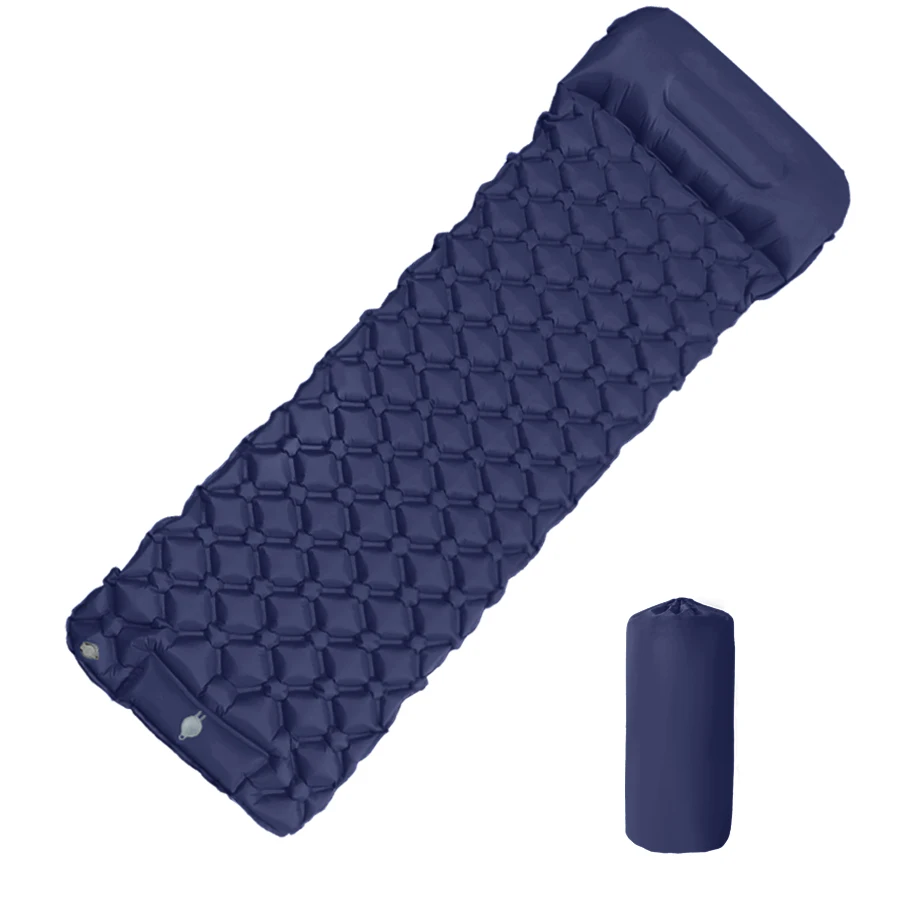
Priced at $22.15 from Shop1103241080 Store, this option stands out because the listing explicitly claims a built-in inflator pump. For backpackers, a built-in pump eliminates the need to carry a separate inflation device or spend energy blowing up the pad manually after a long hike. As with the previous option, confirm the exact weight of the pad and whether the built-in mechanism adds significant bulk compared to standard valve-only designs.
For Basecamp Comfort: Self-Inflating and Extra-Thick Pads
When you do not have to carry your gear far, thickness becomes the priority. A thicker pad provides more distance between you and the ground, improving both comfort and thermal protection.
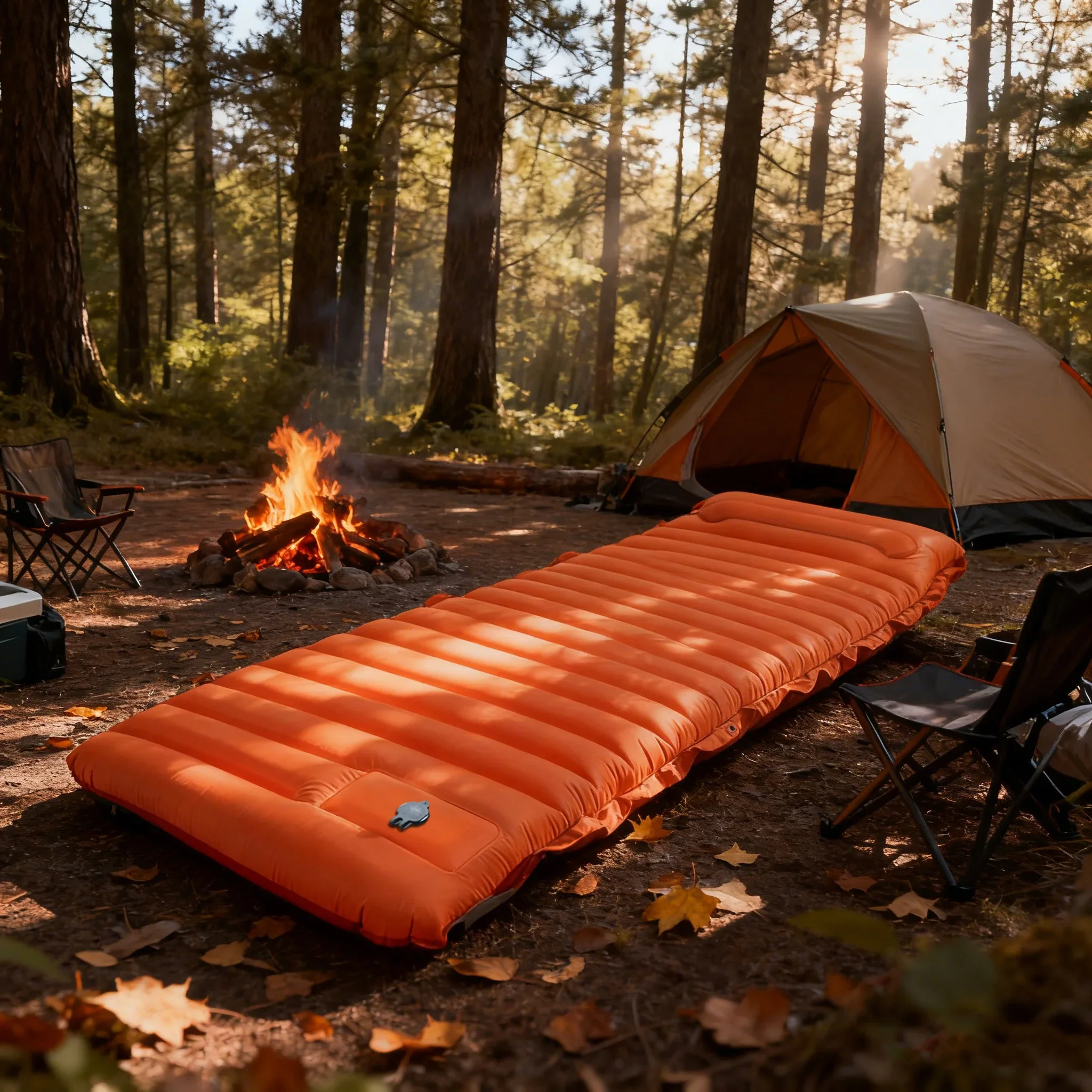
This Stone's Store listing advertises an extra-thick 4-inch self-inflating mat priced at $41.19. A 4-inch profile is substantial for any camping scenario, offering significant elevation from rocks and roots. Notably, the listing describes the pad as "spliceable," suggesting multiple units can be connected together—a useful feature for families or groups wanting to create a continuous sleeping surface in a large cabin tent. Verify the splicing mechanism (e.g., buttons, straps, or overlapping edges) and the total weight, as a 4-inch self-inflating foam core will be considerably heavier than a standard air pad.
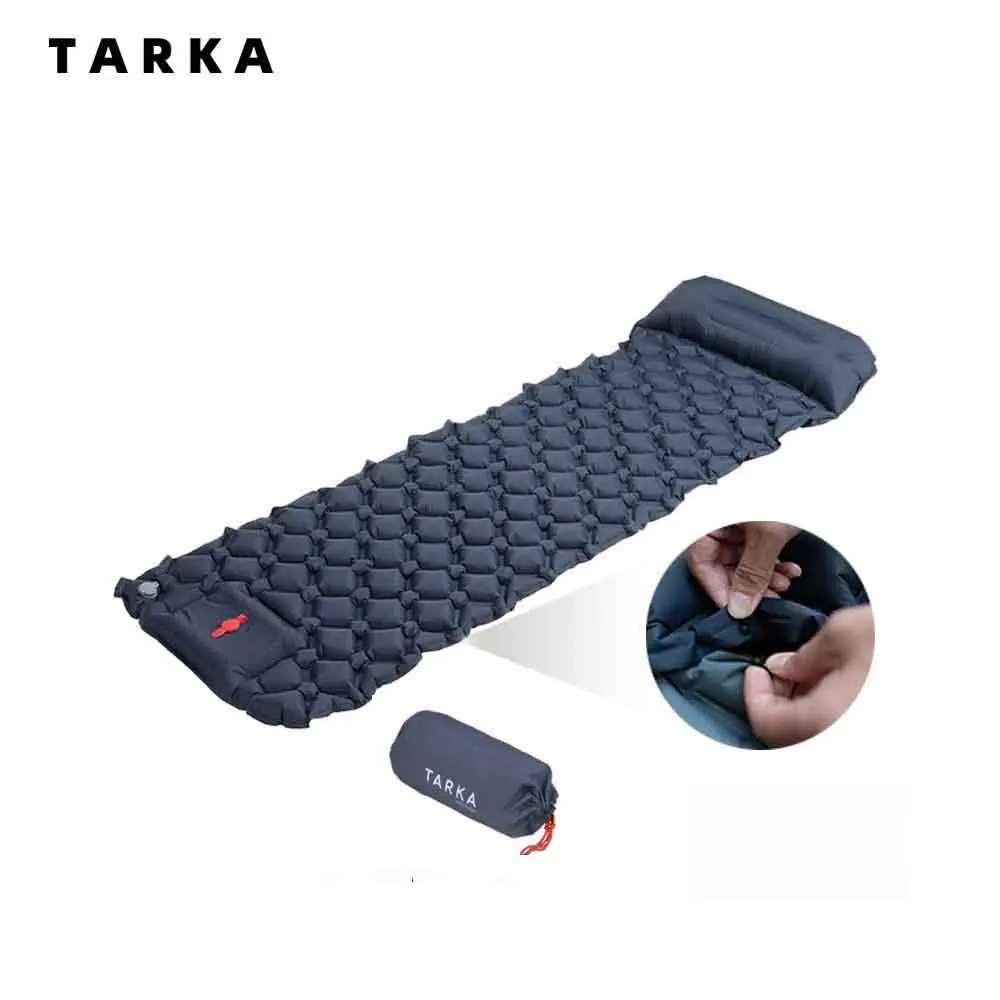
Also from Stone's Store at $25.59, this TARKA-branded listing uses several overlapping terms, describing itself as an inflatable air cushion, a self-inflating mattress, and a sleeping pad with a pillow. This ambiguity is common in marketplace titles. Before purchasing, you must clarify the inflation mechanism: does it contain internal foam that draws air in automatically, or is it a standard air pad that requires manual inflation? Check the product description or ask the seller directly to avoid receiving a different style than expected.
For Couples or Extra Space: Double Mattresses
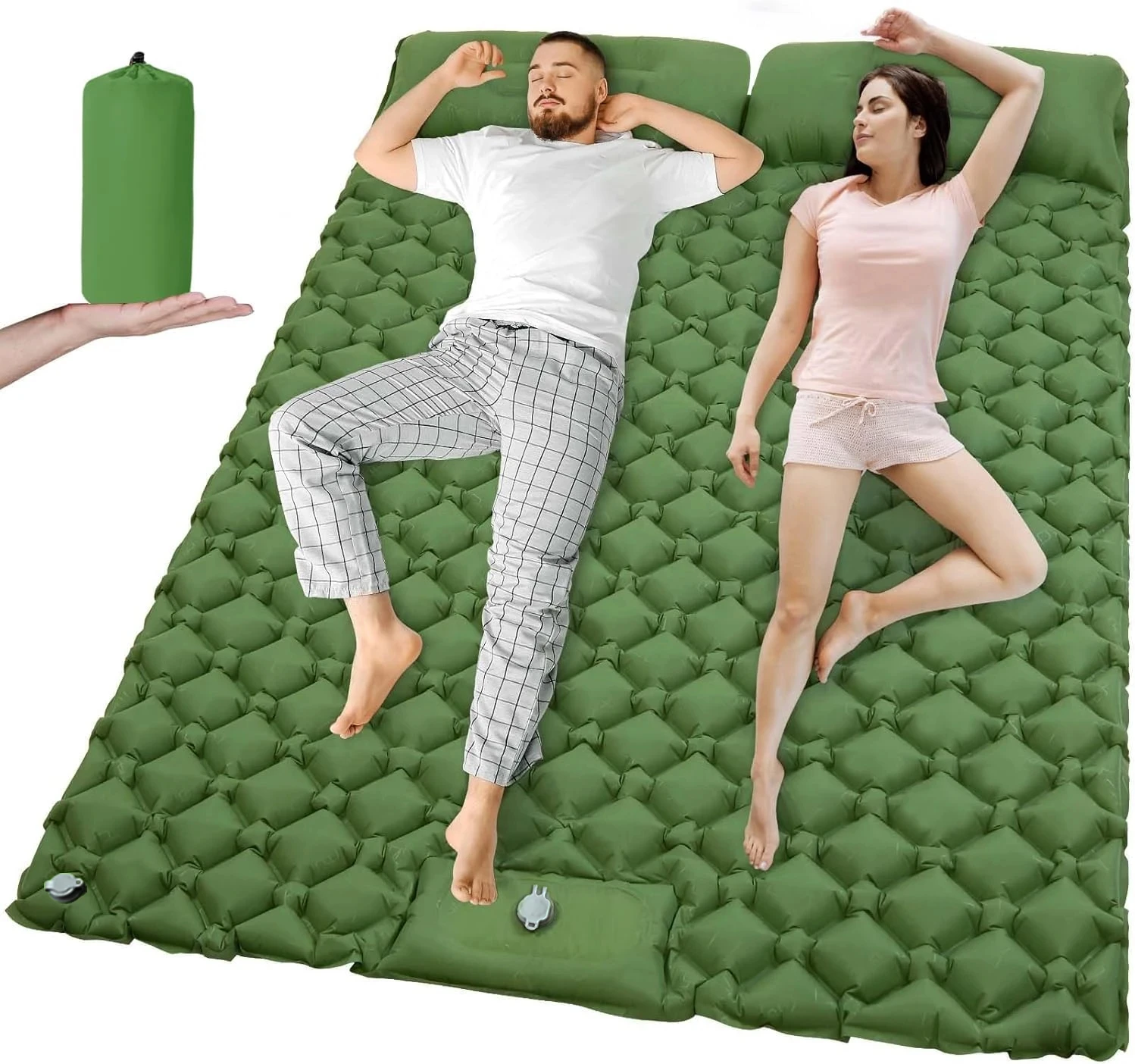
At $41.19, this double inflatable mattress from Stone's Store is advertised as extra wide and ultralight. While "ultralight" is used in the title, double-wide mats inherently require more material and air volume than single pads, so verify the actual listed weight against your transport needs. This style is best suited for car travel or spacious multi-person tents. Confirm the inflated width to ensure it fits your specific tent footprint without pressing against the tent walls, which can cause condensation issues.
What to Verify Before Buying a Budget Camping Mattress
Marketplace listings often use broad keywords to attract searches. To make an informed decision, look past the title and check the seller's specification sheet for these critical details:
- Inflation Method: Does it require mouth inflation, a separate pump bag, or a built-in pump? If it claims to be "self-inflating," verify the presence of open-cell foam in the description.
- R-Value or Temperature Rating: An uninsulated air pad offers almost no warmth. If you plan to camp in cool weather, look for a stated R-value (a measure of thermal resistance). If none is listed, assume the pad is strictly for warm-weather use.
- Material Thickness (Denier): Thicker fabrics resist punctures better. Lightweight hiking pads often sacrifice durability for weight savings. Check if the listing specifies the fabric denier (e.g., 20D vs. 75D).
- Exact Dimensions: Ensure the length accommodates your height and the width fits inside your sleeping bag or tent.
If you prefer sleeping elevated off the ground entirely rather than on a floor pad, an insulated mattress paired with a frame might suit you better. Our comparison of camping cots for tents and car camping explores frame heights, weights, and how pairing a cot with a pad prevents cold-weather heat loss.
Making Your Choice
Selecting a camping mattress comes down to balancing weight, comfort, and warmth based on your itinerary. If you are hiking miles each day, prioritize the ultralight options with built-in pumps or simple valves, accepting that you may sacrifice some cushioning. If you are driving to a campsite, the 4-inch self-inflating or double-wide options provide significantly better sleep quality. Always cross-reference the seller's detailed specifications against your specific tent size and expected nighttime temperatures before finalizing your purchase.